Paint Protection

Ceramic Coating

2-year and 5+ year Graphene Ceramic Coatings for vehicles and watercraft, with full paint correction.

Ceramic Coating

What Is Ceramic Coating?

You’ve probably heard the term “ceramic coating,” but what exactly is it; and what makes it different from a traditional wax or sealant?

At its core, a ceramic coating is a liquid protective coating that chemically bonds to your vehicle’s paint at a molecular level. Rather than simply sitting on top of the paint like a traditional wax, a ceramic coating uses advanced nanotechnology and ceramic-based chemistry to create a durable, bonded layer of protection over the vehicle’s clear coat.

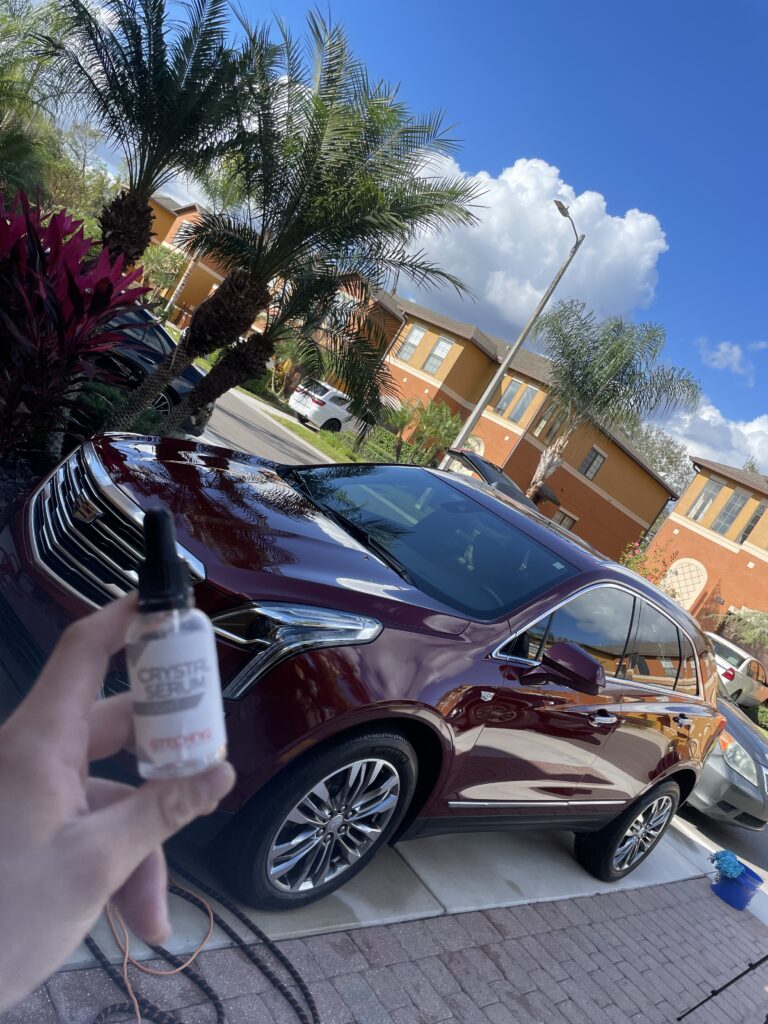
Black BMW paint reflecting the garage after detailing Burgundy Cadillac XT5 with ceramic spray coating
The Science

How Does Ceramic Coating Work?

Ceramic coatings are typically formulated with SiO₂ (silicon dioxide). When properly applied to a prepared paint surface, the coating undergoes a curing process that allows it to form a strong chemical bond with the surface.

Once cured, this creates a dense, cross-linked protective layer that is highly resistant to environmental and chemical exposure. The result is a surface that is not only more resistant to contamination, but also significantly more hydrophobic than untreated paint.

This hydrophobic behavior causes water to bead and shed from the surface, taking dirt and contaminants with it and making the vehicle easier to maintain.

Beyond hydrophobicity, a quality ceramic coating provides protection against UV exposure, oxidation, road contaminants, bird droppings, tree sap, road grime, and everyday chemical exposure. It also enhances the depth, gloss, and clarity of the vehicle’s paint.

Know the Difference

Ceramic Coating Compared

Ceramic Coating vs. Wax

Traditional waxes and many paint sealants primarily form a sacrificial layer over the paint. They can provide excellent gloss and short-term protection, but they gradually break down through washing, weather, and environmental exposure.

A ceramic coating is engineered differently. Instead of simply applying another layer over the paint, it chemically bonds with the surface to create a much more durable protective barrier.

That is what allows professional ceramic coatings to provide protection measured in years rather than weeks or months.

Ceramic Coating vs. Ceramic Spray Coatings

Ceramic spray coatings can provide impressive gloss, hydrophobicity, and short-term protection, but they are not the same as a professionally applied ceramic coating.

Most ceramic sprays are designed to be quick-application products that sit on or partially bond to the existing surface, providing an additional layer of protection that typically lasts for weeks or months. They are excellent for maintenance and can help extend the performance of an existing coating, but they are not designed to provide the same level of long-term protection as a professionally installed ceramic coating.

A professional ceramic coating undergoes a more extensive preparation, application, and curing process, allowing the coating to form a more durable chemical bond with the vehicle's paint. This results in significantly longer-lasting protection and greater resistance to environmental and chemical exposure.

In simple terms: ceramic sprays are excellent maintenance products; professional ceramic coatings are a long-term paint protection system.
Levels of Protection

Our Ceramic Coating Options

Every vehicle and owner has different needs, which is why we offer multiple levels of ceramic protection.

Our coating options range from 2-year protection to 5+ year Graphene Ceramic Coatings, allowing us to match the level of protection to your vehicle, driving habits, and long-term expectations.

Ceramic Coatings on watercrafts can last up to 2-years!

Top Tier Protection

What Makes Graphene Ceramic Different?

Our highest-level option incorporates graphene technology into the ceramic coating formulation.

Graphene is a carbon-based nanomaterial known for its exceptional strength, chemical stability, and conductivity. When incorporated into a ceramic coating formulation, it can enhance the coating's durability, chemical resistance, and overall performance while maintaining the hydrophobic properties and high-gloss appearance associated with ceramic coatings.

The result is an advanced protective coating engineered for long-term durability and maximum surface protection.

Whether you're looking for reliable 2-year protection or our 5+ year Graphene Ceramic Coating, the goal is the same: protect your investment, preserve your paint, and make maintaining your vehicle easier.

The Importance of the Process

Our Ceramic Coating Process

When preparing a vehicle for a ceramic coating, I take extra steps that some may consider overkill. I consider them necessary to achieve the best possible results.

A professional ceramic coating is only as effective as the surface it is applied to. Proper preparation removes contamination, refines the paint, and creates the cleanest possible surface for the coating to bond to. Every stage of the process has a specific purpose, from the initial wash to the final application.

  1. 1

    Initial Pre-Wash & Foam Application

    The process begins with a thorough pre-wash using a vehicle-safe pressure washer and a foam cannon.

    I first apply a specialized vehicle shampoo formulated specifically for ceramic coating preparation. The foam is allowed to work on the surface to loosen dirt, road grime, and environmental buildup before the vehicle is thoroughly rinsed.

    The vehicle-safe pressure washer is then used to remove the loosened contamination and prepare the vehicle for the contact wash.

  2. 2

    Two-Bucket Hand Wash

    After the initial rinse, I move into a controlled two-bucket hand-washing process.

    Both buckets contain water and the same ceramic coating preparation shampoo, with one bucket serving as the wash solution and the other dedicated to rinsing the wash mitt.

    Each bucket is equipped with a grit guard. Grit guards help separate dirt and heavier particles from the wash solution, keeping them at the bottom of the bucket and away from the wash mitt.

    I wash the vehicle one panel at a time, thoroughly rinsing and reloading the mitt between sections. I work from the top of the vehicle downward, allowing the cleaner portions of the vehicle to be addressed before moving toward areas that typically contain heavier road grime.

  3. 3

    Iron Decontamination

    After the hand wash, the vehicle undergoes an iron decontamination treatment.

    Iron particles from sources such as brake dust and industrial fallout can become bonded to the vehicle's paint and cannot always be removed through normal washing. An iron remover chemically reacts with these ferrous particles, breaking them down so they can be safely rinsed away.

    This removes embedded iron contamination that a standard wash cannot effectively address and further prepares the paint for the correction process.

  4. 4

    Complete Rewash

    Following the iron decontamination, I wash the vehicle again.

    This additional wash removes any remaining iron-removal solution and loosened contamination from the vehicle. It also thoroughly flushes areas around emblems, trim, body seams, and other areas where product or contaminated water may collect.

    While this additional wash may seem excessive to some, I consider it an important part of ensuring the vehicle is completely clean before moving into mechanical decontamination.

  5. 5

    Mechanical Decontamination: Clay Bar

    Once the vehicle has been chemically decontaminated and rewashing is complete, I move to mechanical decontamination using a clay bar or appropriate clay media.

    A clay bar is designed to remove bonded contaminants that remain attached to the paint after washing and chemical decontamination. These can include industrial fallout, overspray, rail dust, and other microscopic particles that can leave the paint feeling rough even when it appears visually clean.

    The clay media is used with a dedicated lubricant and carefully worked across the paint to lift these remaining contaminants from the surface.

    The result is an exceptionally clean and smooth surface that is ready for paint correction.

  6. 6

    Paint Inspection & Correction

    With the paint thoroughly cleaned and decontaminated, I move into paint correction.

    Paint correction is the process of refining the vehicle's paint through controlled machine polishing to reduce or remove imperfections such as swirl marks, light scratches, oxidation, water spotting, and other defects, depending on the condition of the paint and the level of correction being performed.

    I work in small, controlled sections at a time, allowing me to carefully monitor the paint and maintain consistent results throughout the vehicle.

    Before each section is polished, I use a panel preparation spray to ensure the surface is completely clean immediately before the polishing process begins.

    I use professional machine polishers in multiple sizes to ensure I have the appropriate machine for the different surfaces, contours, and areas of the vehicle.

    Paint correction is sometimes referred to as buffing, but professional paint correction involves considerably more than simply running a buffer over the vehicle. Pad selection, polishing compound, machine speed, pressure, working time, paint hardness, temperature, and the condition of the paint all influence the correction process.

  7. 7

    Final Panel Preparation

    Once paint correction is complete, the vehicle undergoes a final preparation process before the ceramic coating is applied.

    Polishing can leave behind oils, lubricants, and microscopic residues that may interfere with the coating's ability to properly bond to the paint. A dedicated panel preparation solution is used to remove these residues and expose a clean surface.

    This step ensures that the ceramic coating is being applied directly to properly prepared paint, without polishing residue or other substances interfering with the coating's bond.

  8. 8

    Ceramic Coating Application

    Only after the paint has been thoroughly washed, chemically decontaminated, mechanically decontaminated, corrected, and properly prepared is the vehicle ready for the ceramic coating.

    A professional, true ceramic coating is packaged in a glass bottle because of the reactive chemical components within the coating formulation. These formulations require packaging that can withstand the chemistry of the product without reacting with or compromising the coating before it is applied.

    This is one of the fundamental differences between a professional ceramic coating and many consumer-level ceramic sprays or ceramic-infused products. Products marketed as ceramic sprays or ceramic protection products may contain ceramic-based ingredients, but they are formulated differently and do not provide the same coating structure, concentration, or long-term performance as a professional ceramic coating.

    The coating is applied to the prepared paint one section at a time using a dedicated coating applicator. A controlled amount of product is applied and evenly spread across the section in a systematic pattern to ensure consistent coverage.

    The coating is then allowed to flash. Flashing occurs as the carrier solvents within the coating begin to evaporate and the coating starts transitioning from its liquid state toward its cured film.

    The flash time is carefully monitored because the appropriate leveling window depends on the specific coating formulation and environmental conditions such as temperature and humidity.

    Once the coating reaches the appropriate flash point, it is carefully leveled using specialized microfiber towels. Excess coating is removed while leaving behind an even, uniform layer of protection.

    Each section is carefully inspected during the application process to ensure the coating is properly leveled before moving to the next section.

    This process is repeated systematically across the vehicle until all applicable painted surfaces have been coated.

This process takes anywhere from 4-8+ hours depending on the condition of the vehicle’s paint.

For questions regarding my process, the equipment I use, the products I use, or any other questions please do not hesitate to reach out via talk or text: 813-580-0735

Why Not Just Jump Into Paint Correction?

It may seem logical to simply wash a vehicle and immediately begin polishing the paint. However, paint correction performed on an improperly prepared surface can create more problems than it solves.

Paint correction is a controlled abrasive process. The polishing pad and compound are designed to refine the paint, but they must be used on a properly prepared surface and with the correct technique.

If contamination remains on the paint, it can interfere with the polishing process and potentially contribute to additional marring, swirling, hazing, or an inconsistent finish. Using the wrong pad, compound, machine, speed, pressure, or technique can also create problems such as excessive haze, micro-marring, uneven correction, or, in more severe cases, burning through the clear coat.

This is why the preparation process comes first.

The goal is not to rush into the correction stage. The goal is to create the right conditions for paint correction to be performed safely and effectively.

Why We Take These Extra Steps

Yes, a ceramic coating can be applied to a vehicle without going through an extensive preparation process.

However, applying a coating is not the same thing as properly preparing a vehicle for one.

Without the proper washing, chemical decontamination, mechanical decontamination, paint correction, and panel preparation, the vehicle will not achieve the appearance, bonding, durability, hydrophobic performance, or overall protective effect that a properly installed ceramic coating is capable of providing.

The coating is only one part of the process.

The preparation is what allows the coating to perform as intended and last.

For Ceramic Coating and Graphene Ceramic Coating scheduling, please contact Michael Donley via talk or text at 813-580-0735

Ceramic Coating Pricing

For prices view my “Exterior Only Packages” under the “Services” tab.

Ceramic Coating

Starting At$950

2 Year Coating:

  • Coupe:$950
  • Sedan:$1,000
  • SUV:$1,050
  • Truck:$1,250
  • Large SUV/Mini Van:$1,400
Book 2 Year Coating

5+ Year Graphene Ceramic Coating:

  • Coupe:$1,050
  • Sedan:$1,100
  • SUV:$1,250
  • Truck:$1,350
  • Large SUV/Mini Van:$1,500
Book Graphene Coating

Includes

  • Exterior Wash and Shampoo Using Two Buckets
  • Tires/ Rims Scrubbed and Shined
  • Iron Decontamination
  • Re-Wash to Remove Excess Residue
  • Clay Bar
  • Single Stage Paint Correction
  • Ceramic Coating
  • Rain-X
Book Appointment

Vehicle pricing can be found under the "Services" tab, then scroll to "Exterior Packages"

For boats and other water vessels, contact me directly: 813-580-0735

Ready to Restore Your Vehicle's Shine?

Book online or call/text (813) 580-0735 — we come to you.

Book an Appointment